
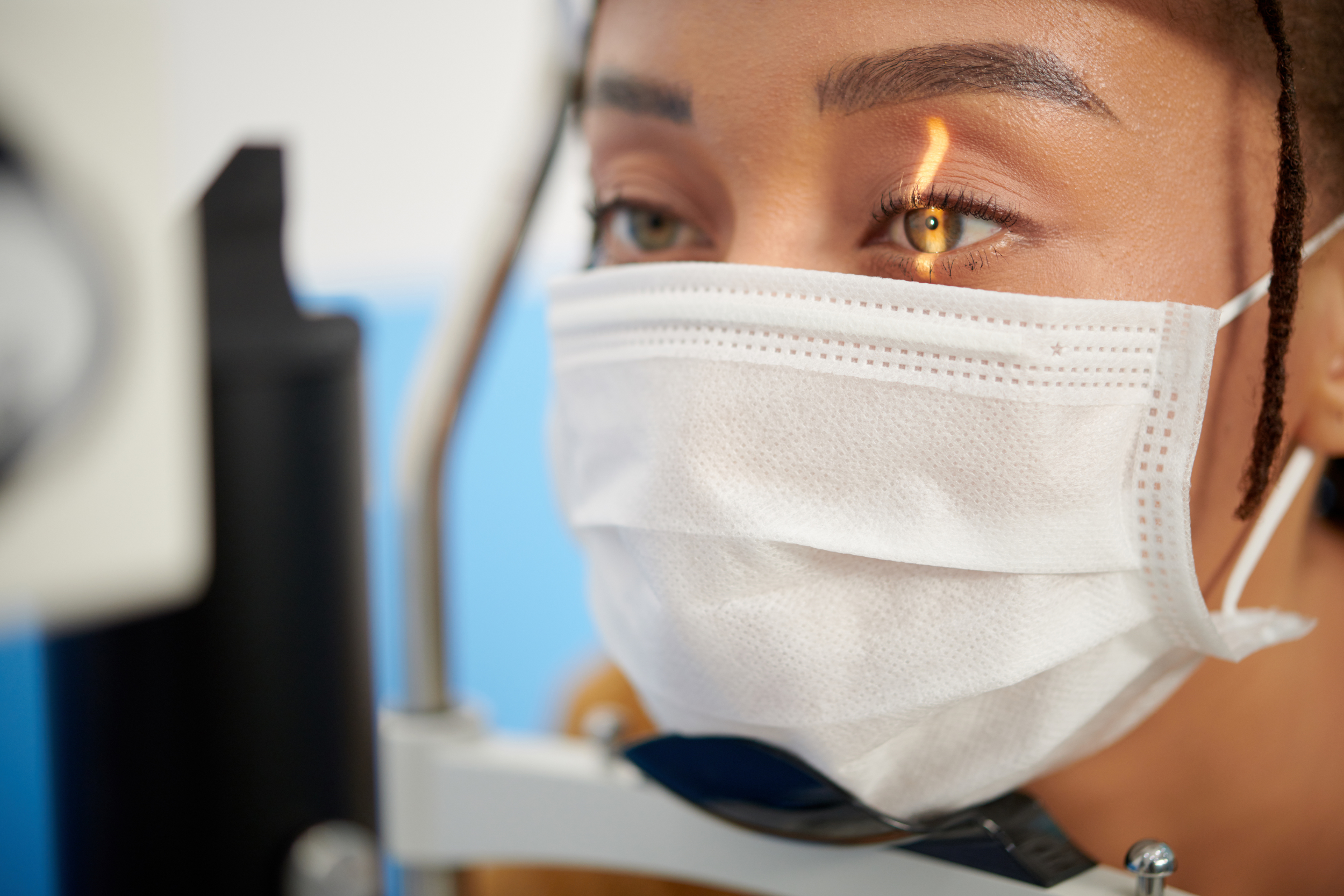
It's easy to assume that if your vision hasn't changed, your eyes must be healthy. After all, if you can read, drive, and go about your day without difficulty, what reason would you have to think something might be wrong?
For people living with diabetes, however, that assumption can be misleading.
Diabetic retinopathy can develop without noticeable symptoms, meaning changes may already be occurring inside the eye while someone continues to see perfectly well.
During National Diabetes Month, it's worth taking a closer look at this often-overlooked complication of diabetes and why making routine eye screenings more accessible matters.
The Assumption: Seeing Clearly Means Everything Is Fine
When we think about vision problems, we tend to think about symptoms we can recognize, such as blurry eyesight, difficulty reading, or trouble seeing at night.
But diabetic retinopathy doesn't always provide those early warnings.
According to the National Eye Institute (NEI), the early stages of diabetic retinopathy usually have no symptoms. Someone may feel perfectly comfortable with their vision while changes are developing in the blood vessels of the retina.
This creates an interesting challenge for preventive healthcare. If a person doesn't notice anything wrong, scheduling an eye examination may not feel particularly urgent, especially when they're already managing other aspects of diabetes.
It's understandable. Diabetes management often involves monitoring blood sugar, taking medications, attending appointments, and making everyday decisions about diet and physical activity. Eye health can become one more item on an already lengthy list.
Yet the absence of vision problems doesn't necessarily mean the absence of eye disease.
That's why relying on symptoms alone can leave important changes undetected.
What's Happening Behind the Scenes?
To understand diabetic retinopathy, it helps to know a little about the retina itself.
The retina is a thin layer of light-sensitive tissue at the back of the eye. It plays an essential role in vision by capturing light and sending visual information to the brain.
Over time, elevated blood sugar can damage the tiny blood vessels that supply the retina. These vessels may weaken, leak fluid, or become blocked, interfering with the retina's normal function.
As the condition progresses, abnormal new blood vessels may develop. These vessels are fragile and can bleed, potentially leading to serious complications and vision loss.
What makes diabetic retinopathy particularly concerning is that these changes can begin long before a person notices a difference in their eyesight.
In more advanced stages, symptoms may include blurred vision, dark spots, or floating shapes in the field of vision. By that point, the disease may already require treatment.
The encouraging part is that identifying diabetic retinopathy early gives healthcare professionals an opportunity to monitor the condition, recommend appropriate treatment, and take steps to help protect a person's vision.
And that's where routine screening becomes especially valuable.
Why Waiting for Symptoms Can Be a Problem
For health plans and healthcare providers, one of the challenges surrounding diabetic eye health is helping members understand the importance of screening when they feel perfectly fine.
Unlike an appointment prompted by pain or a noticeable symptom, preventive eye screening asks someone to take action before they have an obvious reason to be concerned.
But that proactive approach is exactly what makes it valuable.
The American Diabetes Association's Standards of Care in Diabetes—2026 recommends an initial comprehensive dilated eye examination at the time of diagnosis for people with type 2 diabetes and within five years of diagnosis for adults with type 1 diabetes.
Ongoing screening intervals depend on individual circumstances, including previous eye examination findings, diabetes management, and the presence or progression of retinopathy.
The guidelines also recognize retinal photography with remote interpretation as an appropriate screening approach, provided there are pathways for timely referral when additional examination or treatment is needed.
That distinction is important. Retinal imaging can help identify potential signs of diabetic retinopathy, but it does not replace every component of a comprehensive dilated eye examination or the need for follow-up with an eye care professional.
For health plans, the opportunity extends beyond identifying members who are due for screening. It also involves helping them understand why the screening matters and addressing practical barriers that may prevent them from completing it.
An appointment may be recommended, but transportation difficulties, scheduling conflicts, and limited access to nearby services can still stand in the way.
The more convenient the screening process becomes, the easier it may be for members to take that important preventive step.
Bringing Eye Screening Into the Home
Traditionally, receiving diabetic eye care has meant scheduling an appointment and traveling to an eye care facility. For some members, that process is relatively straightforward. For others, it can be a significant obstacle.
In-home screening offers another way to reach members who might otherwise have difficulty accessing recommended services.
Through partnerships with health plans, MeaeCare provides diabetic retinopathy screenings directly in eligible members' homes, using portable retinal imaging technology to capture detailed images of the back of the eye.
Rather than requiring members to travel to a separate screening location, trained personnel bring the necessary equipment to them. The images are reviewed by qualified clinical professionals, with findings communicated to the appropriate healthcare providers to help guide next steps.
This approach can be particularly useful for members with transportation challenges, mobility limitations, or other circumstances that make traditional appointments difficult to arrange.
In-home retinal screening isn't intended to replace comprehensive eye care. Its value lies in providing another accessible screening option while helping connect members and their providers with information that may require further attention.
For health plans working to improve preventive screening participation, expanding where and how services are delivered can help address barriers that traditional outreach alone may not resolve.
Looking Beyond What We Can See
The challenge with diabetic retinopathy is that someone can feel confident in their vision while remaining unaware of changes occurring inside their eyes.
It's a reminder of why preventive healthcare matters, particularly for conditions that don't always announce themselves through noticeable symptoms.
During National Diabetes Month, conversations about managing diabetes should include eye health, even when vision seems completely normal.
For healthcare organizations, that means continuing to educate members, encourage appropriate screenings, and consider how services can better fit into the lives of the people who need them.
And for someone living with diabetes, it means recognizing that seeing clearly today doesn't tell the entire story about their eye health.
Sometimes, understanding the full picture requires looking a little closer.
Ready to schedule your visit?
Call us, email us, or book online. We're here Monday through Friday, 9am to 5pm.

More from our blog
Explore insights on care delivery